
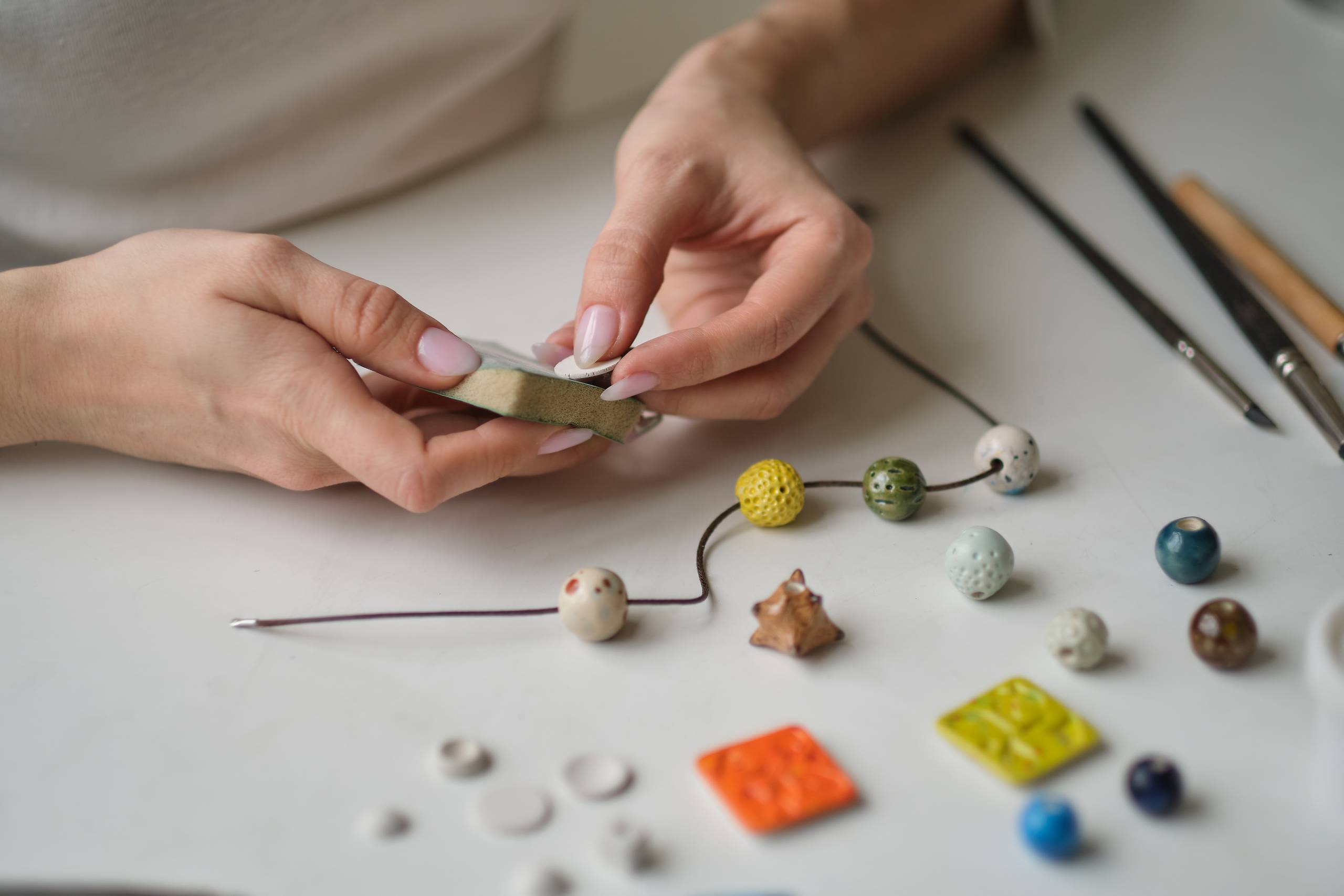
How to Make Mosaic Jewelry Feel Like a Daily Practice
There are a few ways to approach mosaic jewelry-making as a daily habit. It can be as simple as dedicating time each day to working on a mosaic jewelry piece or ensuring that you create a certain amount of mosaic jewelry every day. Alternatively, it could mean incorporating elements of mosaic jewelry-making into your routine, such as always wearing mosaic jewelry, frequently posting about mosaic jewelry on social media, or continuously learning about new techniques and methods for creating mosaic jewelry.
The most enjoyable aspect of mosaic jewelry is that once you can establish a routine that you can do daily or weekly, you will find that your creations are getting better and better. I know some people out there are talented, but more often than not, the reason we see some people are doing well and some people are not is because of their routine. They simply spend more time on it, and they are more consistent. Once you are able to find time for mosaic jewelry every week, or even every day, you will find that your skills are improving, and that you are actually having fun. You are not trying to make something perfect anymore; you are trying to have fun. Eventually, you will have the confidence to say that yes, I am doing well and I can see my improvements. Once that happens, mosaic jewelry can become part of your life.
In order to establish a practice, you must begin by building an environment that makes it easy to start. Your studio doesn’t need to be big or fancy, it just needs to be simple enough so you don’t have a lot of resistance when you decide you want to make something. Your goal is not to have the perfect workspace, your goal is to have a space where everything is already set up for you. When your tools and tiles are right there in front of you, you’ll be more inclined to make something. The barrier to entry is lowered, and you’re able to simply start, rather than having to work up the motivation. The difference is subtle, but it makes all the difference.
With the environment prepared, the maker must then establish short-term goals. A mosaic jewelry project can be divided into distinct phases: designing, cutting, tiling, and edging. One phase at a time can be tackled per sitting, making the project seem less daunting. The artist must concentrate on a single phase at a time, relieving some of the pressure of quality, and can see the progression of work completed, further motivating the artist.
Over time, a maker will find their signature aesthetic. The more they make, the clearer their taste will become. The colors, textures and patterns they are drawn to will start to emerge. The craft can be as much an exercise in taste as technique. A maker will learn to trust their instincts and make decisions more intuitively. The process will be an expression of their own tastes, and the jewelry an extension of themselves. This is the most rewarding part of the craft, that as a maker creates, they find their voice.
Lastly, showing and discussing completed works boosts the practice even more. When a piece is worn, given away or just photographed, the act of showing others gives a feeling of finality. The discussion can aid the creator in figuring out what went right and how they might do better next time. And that’s what makes mosaic jewelry a sustained practice: practice leads to creation, creation leads to reflection, and so on. Practice becomes a habit, and a habit becomes a confidence. Eventually, it becomes a go-to source of fun, growth, and self-expression.