
Choosing Materials for Mosaic Jewelry: A Guide to Better Results
Working on mosaic jewelry projects can sometimes feel like a battle to achieve the best possible outcome, and it all starts with the initial decision of which materials to use. We have several options available, and I’m here to discuss their advantages and disadvantages.
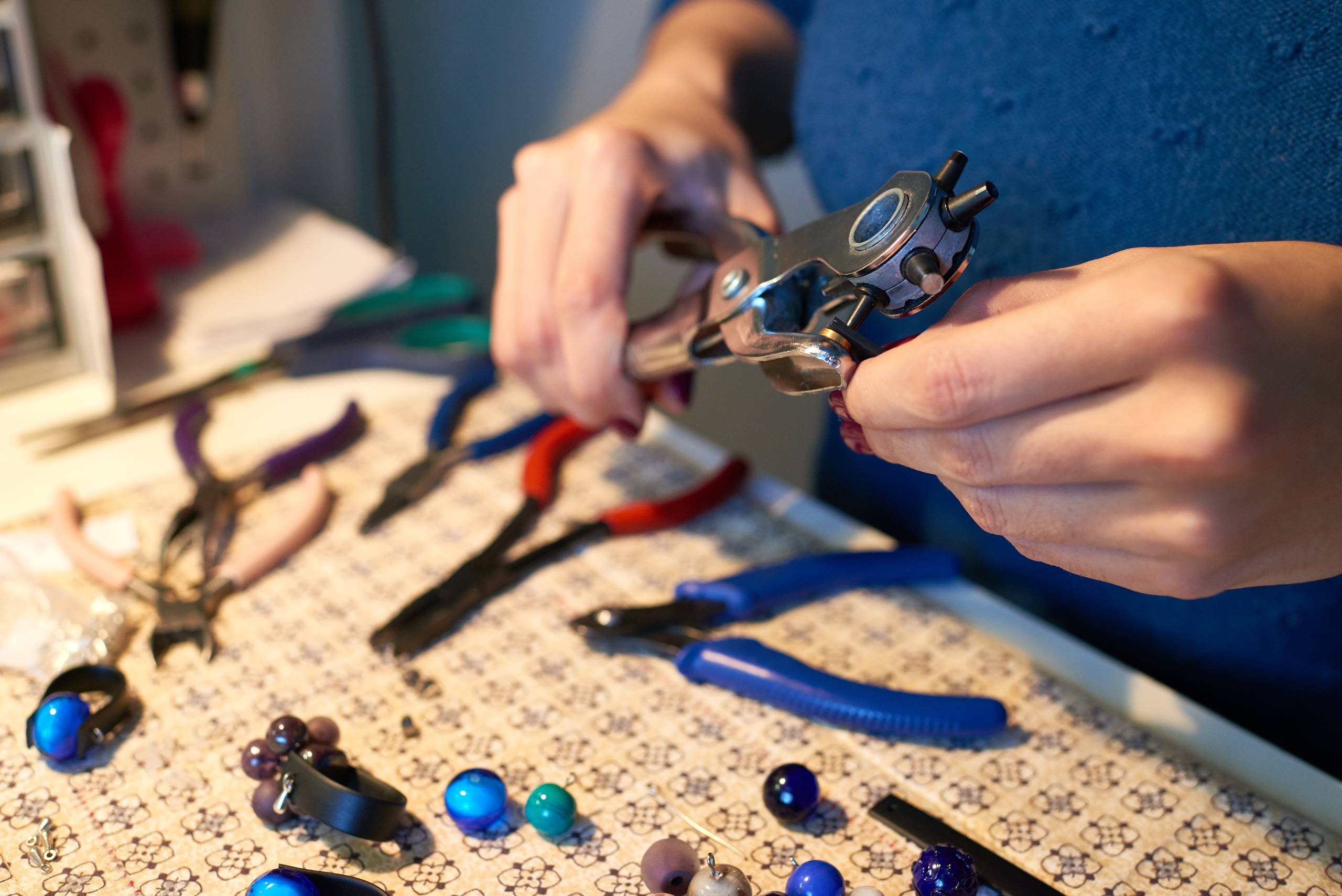
Materials are the second creative element, and will define your project. It will tell what your project will look like, what the texture is, what the shine will be. In most of the crafts, the material should be all the same, in mosaic jewelry, each stone, tile or piece of glass, will have its personality and you are the one that will make it special. First you have to decide what you want your project to look like, if you want it to be soft and romantic, shining and glittery, or earthy and rocky.
One of the first questions to answer is the choice of base and tile. The base has to be strong enough to carry the weight of the design, but still be wearable. There are different gauges of tile and glass, and they have different sheens; they react differently to being set. Some of them sparkle more, some have a soft, muted look. It takes practice to marry those aspects and get the desired look. There’s also the question of tile size, which is also a matter of design. Some of the most beautiful mosaics involve tiny tiles that are placed in tiny patterns. Others, like the figurals, tend to be larger. Again, it’s a question of choosing the right tile for the design you’re trying to do, and the right tile for your skill level.
With that in mind, we can move on to color selection. Color is a potent element in mosaic jewelry, because it impacts the emotional content of the work immediately. When you’re just starting out, it can be a daunting task to decide on color, but as you work from your principles, it gets easier. You might find that you prefer a few colors for a fresh, simple style, or that you like to work with a wide palette to generate excitement and movement. You can use principles like contrast, harmony, and balance to help you choose. You don’t need to make all your color decisions at once; just aim to create a palette that will enhance your design and emphasize your focal points.
With the material and color selected, the next step is deciding where to place and adhere the items. The adhesive and the spacing affect the aesthetic and longevity of the piece. The placement is where the design is decided and the lesson of patience is introduced. You often times have to adjust pieces multiple times, testing different positions to decide if that is where you want it to be. It’s where the lesson of this being a process and not an immediate outcome is learned. The end product is something that feels intentional and balanced.
Last but not least, the final stages are the outcome of your project. After grouting and sealing your mosaic jewel is ready to be worn, so these stages are crucial. You need to pay attention to them, because they will give the final look and touch to your jewel. A finished mosaic jewel should look neat and nice, and you have to be satisfied with it. Only now does the selection of the mosaic materials make sense, since the end result of your work will depend on this initial selection. Mosaic jewelry is a project where you need to make the right choices, and the choice of materials is the first step.