
The Art of Mosaic Jewelry: Turning Small Pieces into Big Meaning
Mosaic jewelry, a style of jewelry that features small bits of material fitted together to create a larger design, is more than just visually striking. For many people, mosaic jewelry can be imbued with symbolic meaning, representing the way in which individual parts come together to form a unified whole. This concept can be applied to various aspects of life, such as the bonding of relationships, the joining of communities, or the bringing together of ideas. Furthermore, the process of creating mosaic jewelry, which involves breaking down larger components into smaller fragments to assemble into a new piece, can also serve as a metaphor for transformation and renewal.
Mosaic jewelry, then, is not only a medium or a technique, but also a means of charging disparate little parts with significance, beauty, and personal values. A mosaic jewel begins as a concept—a color scheme, perhaps, or a form, or an emotion—that takes its final shape as the artist places each component part. A key characteristic of mosaic jewelry is its acceptance—and even exploitation—of idiosyncrasies. Unlike components designed to fit together perfectly, mosaic units are used to generate tactile, visual, or rhythmic interest through irregularities in shape, color, and distance between pieces. This subjective, spontaneous process can create a charged and organic quality.
We start with selecting materials, and that is the first layer of intent. Mosaic jewelry is a craft that embraces diversity instead of uniformity. The materials reflect light in different ways and the selection of tile alone can alter the personality of the piece. The initial decisions can be the most difficult because they dictate the overall design path. However, once the materials are selected, the choices start to define themselves. Mosaic jewelry making is an iterative process between the craftsperson and the materials themselves. Trial and error are not only acceptable but expected. It is at this point that confidence begins to grow.
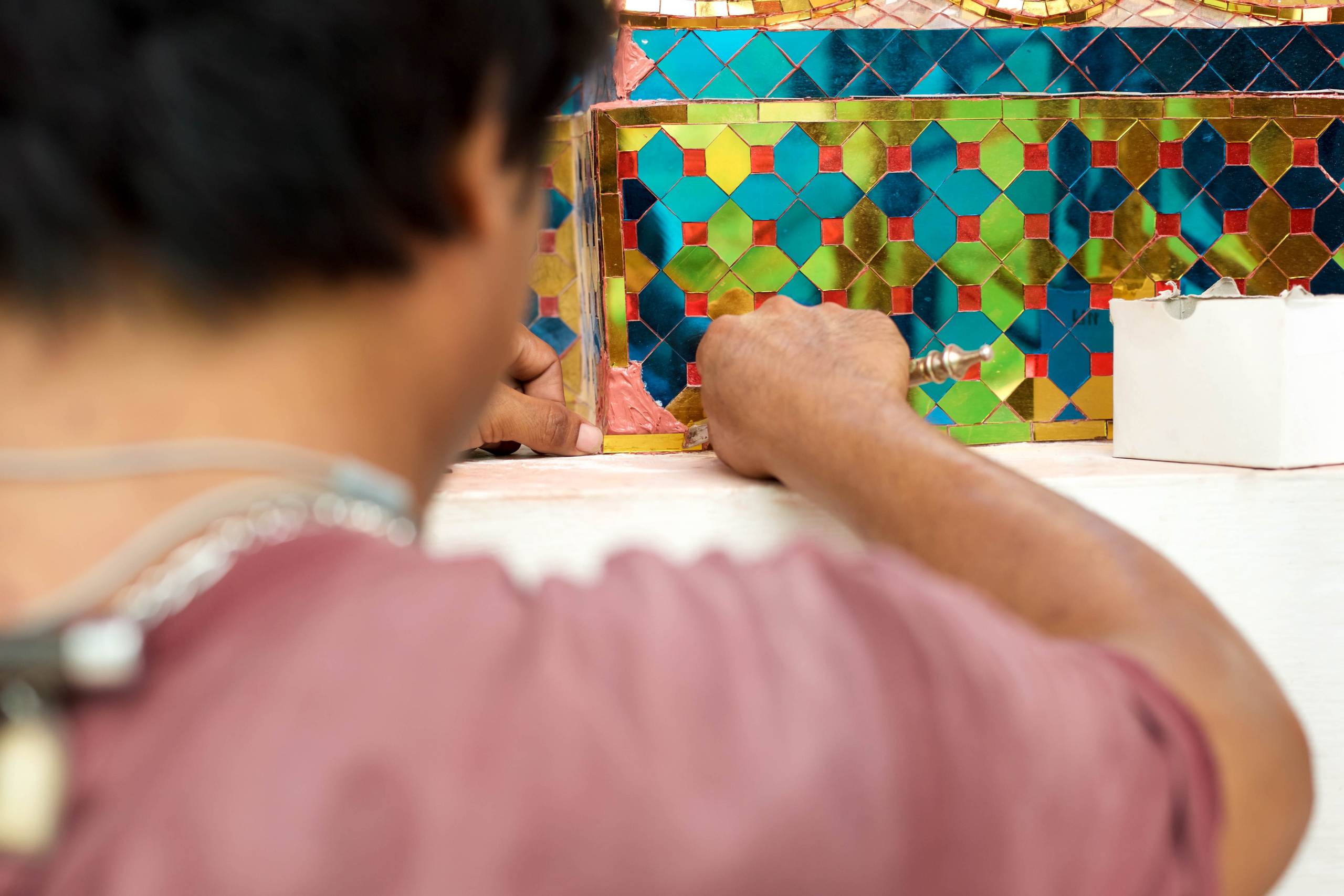
With the design planned out, the process of laying the tiles becomes a meditative activity. Making mosaic jewelry can be time consuming, but it is also an activity that benefits from attention. Every tile has to be laid with a specific purpose in mind, and as much attention needs to be paid to the spaces in between tiles as to the tiles themselves. This is when the mosaic activity becomes a meditative one. The designer has to focus, pay attention to small elements, and observe the impact of a single change on the overall effect. The emphasis switches from one of time to one of attention, and it is this change that can make the activity so fulfilling.
The second step is the finishing stage. Edging, grouting, and sealing are not just part of the process — they are the finish. This is when the work goes from pieces to a gem. Finishing is when the work becomes professional and when the artist takes pride in it. The work carries the design and the message of craftsmanship.
Last but not least, you or the person you’re gifting the jewelry to will wear it. Mosaic jewelry is a form of self-expression, a tiny piece of art that you carry with you wherever you go. It might symbolize an achievement, a party, or just the fact that you want something beautiful in your life. When the creator of the mosaic jewelry sees someone else wearing it, the activity is no longer a pastime, but a means of communication. And this is the greatest value of mosaic jewelry: it’s a language of little stones that says a lot about its wearer.